• Skip to primary navigation
  • Skip to main content
  • Skip to primary sidebar
  • Skip to footer
  • About
  • Emergency
  • Shelters
  • Books
  • Calendar
  • Doggie Directory
    • Animal Communications
    • Boarding
    • Grooming
    • Agility Classes
    • Animal Ambulance and Pet Taxi
    • Artists
    • Daycare
    • Dining with Your Dog
    • Dog Food and Supplies
    • Memorial
    • My Green Dog
    • Pet Sitting
    • Photographers
    • Training
    • Veterinarians
  • Parks
  • Recipes
  • Product Reviews
  • Resources
  • Advertise

Bradenton Dog

  • Home
  • Adoptable Dogs
  • Breed Profile
  • Dog News
  • Dog-Friendly Properties
  • Events
  • Medical News
  • My Green Dog
  • Podcasts
  • Resources

Featured Post

October 11, 2018 by Mary Lou Davidson

Fall in Love at Manatee County Animal Services

Manatee County Animal Services (MCAS) has reached critical capacity with 163 dogs and 130 cats in their care. MCAS is Manatee County’s only open-admission shelter facility, taking in an average of 15 animals per day due to lost pets, kitten season, confiscation cases and owner surrenders.

Manatee County Adoptable | BradentonDog

When a major regional weather event occurs, such as Hurricane Michael, MCAS sees a reduction in their ability to transfer dogs to other rescues throughout the state. This results in “seasonal shelter overcrowding, which seems to be a pattern that we’ve seen for a few years now,” states Sarah Brown, Division Chief of MCAS.

Currently, MCAS is promoting the “Fall in Love” Campaign with adoption fees reduced to $40 for dogs and $20 for cats through Wednesday, October 31. Several other savings incentives are being offered:

  • Any pet that has been at the shelter for 60 days or more has waived adoption fees.
  • Fee-waived adoptions for military, first responders and veterans (through December 31)
  • Seniors for Seniors Discount: Senior adopters (ages 55+) only pay $10 adoption fees for pets seven years and older (through December 31)


For National Pit Bull Awareness Day on Saturday, October 27, MCAS is partnering with Friends of Manatee County Animal Services (FoMCAS) to offer free pet product giveaways to every adopter from October 22 – 27. Through a week-long social media campaign culminating on the day of the event, MCAS and FoMCAS hope to bring awareness and education about Bully Breeds, which comprise a large portion of the MCAS shelter population.


All adoptions include spay/neuter, microchip and rabies certificate. Manatee County residents are required to license their new pet for an additional $15. Adoptable pets can be viewed at mymanatee.org/pets

The Palmetto Adoption Center and Shelter, located at 305 25th Street West in Palmetto, is open Monday – Saturday from 10 a.m. – 5 p.m., with extended hours until 7 p.m. on Wednesdays. The Downtown Cat Adoption Center, located at 1002 Manatee Avenue West, Bradenton, FL 34205, is open Tuesday – Saturday from 11 a.m. – 3 p.m. Animal Services can be reached at 941-742-5933.


For information about Manatee County Animal Services, please contact Hans Wohlgefahrt at[email protected] or 941-742-5933 ext. 8307 or visit www.mymanatee.org/pets.


October 5, 2018 by Mary Lou Davidson

Breed Profile: American Cocker Spaniel

By Alisha Corsi

With their ever-wagging tails and bubbly personalities, it’s no wonder that the American Cocker Spaniel has held the title of America’s most popular breed for a total of 18 years! Their love for people and animals has endeared them to several presidents, including Richard Nixon (who could forget his famous “Checkers Speech”), Rutherford B. Hayes, and Bill Clinton.  Originally bred as hunting dogs, Cocker Spaniels are now generally bred as family pets, and make great companion animals.


Physical Traits

Size & Weight: The Cocker Spaniel is the smallest member of the Sporting Group of dogs, measuring around 13-15 inches at the shoulders (with females being at the shorter end of the scale). Cockers weigh in between 15-30 pounds, making them a medium-sized dog. Their distinctly shaped heads make them immediately recognizable.

Coat & Color: Cocker Spaniels have medium length silky fur on the body and ears, with feathering down the legs and bellies. Color can be any solid or multi-color variety.

Life Expectancy: 12-15 years

Temperament

Often referred to as the “Merry Cocker,” these are cheerful, gentle dogs that are equally well suited for life as a household pet or gundog. Known for their happy dispositions, Cockers are social butterflies who love everyone, and are extremely devoted to their pet parents. They are best suited for living indoors, where they can spend most of their time with the people they love.

Something to Bark About:The term “Cocker Spaniel” actually refers to two different breeds of dogs, the American Cocker and the English Cocker. Both are simply referred to as Cocker Spaniels in their home countries. While similar in stature, American Cockers generally have shorter backs and muzzles than their English cousins. Since their official recognition by the American Kennel Club in 1878, the American Cocker Spaniel has won Best in Show at the prestigious Westminster Kennel Club Dog Show on four separate occasions.

Wags:

  • Cockers are great with adults, children, and other animals.
  • They are generally easy to train.
  • Fiercely loyal, Cockers remain faithful to their human families for life.

Yelps:

  • Cockers who are left to their own devices for too long can become bored and destructive, so if you’re out of the house most of the day, this may not be the dog for you.
  • Because of their popularity, Cockers have frequently been bred in puppy mills, leading to increased numbers of breed-related health problems in certain bloodlines.  These include ear infections, eye problems, and heart conditions.
  • Because of their unique coats they require regular grooming.

Do you think the American Cocker Spaniel would be the perfect addition to your family? Check your local animal shelter or contact Florida Cocker Spaniel Rescue.

September 22, 2018 by Mary Lou Davidson

My Florida Home: Dog-Friendly Please!

By:  Debbie Capobianco

For the last 11 years I’ve been helping clients in the Bradenton area relocate with their precious four-footed family members.  In my experience I’ve found a number of helpful things to keep in mind about the finding a new dog-friendly home.
  • Your first order of business in researching a property is to check the deed restrictions.  Many homeowners association restrict certain breeds and also have weight requirements.  The same goes for condominiums, and apartments.There are also some home communities that do have breed restrictions and sometimes also the limit of how many animals you can have. It is horrible when someone doesn’t check and then they come to find out that their dog is not allowed and they either have to find a new home for their dog or move out. Please don’t let this happen to you.
  • The safest spot for your dog to run around in is in a fenced in area, obviously in a condo you cannot have a fence, but in most homes you can. Some communities also have restrictions on the type of fence you can have and the height of it, so this is important information to have, know your limitations as well.
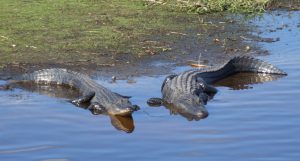
  •  In Florida, almost any body of water, a lake or pond or stream can have an alligator at some time. It is very rare that a alligator will attack a dog, but it does happen, always watch your dog near the water If you don’t want to block your view of the lake, it would be best to get an invisible fence, so your dog does not go too close to the water, it works well and keeps your dog safe.

  • Research the plants that are in your yard, some are toxic to our dogs and cats and you should know what they look like and what symptoms to look for in case of accidental ingestion.
  • It is not advised to leave your dogs outside for extended periods of time, please remember the Florida sun is very hot and your pet can become dehydrated very quickly or even get heat stroke.  But when they are outside in your fenced yard, be sure that they have easy access to clean water and a shady area to relax in.
  • Remember we share our communities with our neighbors.  A bored dog that is left outside is likely to bark or be destructive.  Constant disturbance to your neighbors can lead to ugly situations and may result in a fine.   Don’t leave your dog outside for an extended period.  It’s not safe for the dog.
  •  Pools can also present a safety issue. Get your pets accustomed to the pool, teach them where the steps are so if they accidentally fall in they can swim to the steps and be able to get out. Repetition is the key here.


    • A new place is sometimes scary to a new dog and it might take them sometime to get used to their new surroundings. If at all possible ease them into the new move, by leaving them for short periods of time alone in the beginning till they know they are safe and have adjusted to their new place. It really helps to decrease their anxiety level by taking these simple steps. Invite them to smell and check out every place of your new home with them.
Unpack their beds, bowls and toys first so they know this is where they will be and will feel much more comfortable with their own things. Even the first couple of times you have to leave them, put a piece of your clothing by them so they can smell your scent.
Just like children, our dogs are a part of our family.  They need routine and reassurance to feel comfortable.  With just a little bit of research and forethought,  your dog will have an easier transition when you move to your new home!
Need help finding the perfect dog-friendly home in Florida?
I’m here to help.   You can reach me here or call  941-704-2394.


September 18, 2018 by Mary Lou Davidson

Breed Profile: Scottish Terrier

by Alisha Corsi

Scottish Terriers, or Scotties, are a highland breed of terrier originating in Scotland. They are known for their distinctive beards and eyebrows. Beloved by Scottish and English royalty for centuries, the Scottie only recently made their American debut in the 1890’s, but quickly became a favorite of American presidents as well. Scotties are the only breed who have lived in the White House three times, with Presidents Roosevelt, Eisenhower, and George W. Bush. Former First Dog Barney Bush, who only recently lost his battle with lymphoma, was one of two Scotties who spent 8 years in the White House with President Bush. And Fala Roosevelt was so famous that he is the only pet to ever be memorialized in a statue in Washington, D.C. with his famous pet parent!

FDR and his beloved Fala

Physical Traits

Size & Weight: Scotties are small, compact dogs, standing at 10-11 inches at the shoulders, and weighing between 19-23 pounds.

Coat & Color: Scotties have hard, wiry outer coats with soft, dense undercoats. Their coats can be any color except for white, although dark brown to black is most common.

Life Expectancy: 12-15 years

Temperament

Scotties are small, hardy, loveable dogs with big personalities. Nicknamed “Diehard” for their endless determination, Scotties are independent and self-assured. However, this doesn’t mean that they don’t love people—Scotties are charming dogs who make loving, gentle members of the family. They have a strong desire for approval, and don’t respond well to harsh words or punishment, so it’s best to use positive reinforcement when training.

Something to Bark About: Scotties have won Best in Show at the Westminster Kennel Club Dog Show a total of nine times, second only to the Wire Fox Terrier. And they’re are not just favorites of world leaders and world-class dog shows—recently fans of the classic Monopoly board game voted the Scottie dog game piece the most popular of the original tokens!


Wags

  • If you’re looking for a dog that will reward your love with a lifetime of devotion, this is the dog for you! Scotties are known for becoming fiercely attached to the select few people they bond with.
  • Scotties shed little to none.
  • Scotties make great watch dogs, family pets, and companions—the total package (Not to mention they’re quite handsome)!

Yelps

  • Because of their spirited nature they require regular exercise. They should always be walked on a leash, as their chase instinct is strong.
  • Because they were originally bred to hunt vermin, Scotties are natural-born diggers and so they should be monitored if let outdoors.
  • Scotties can be stubborn, and need to be trained and socialized from a young age.

To adopt a Scottish Terrier of your own, please visit Scottish Terrier Rescue of the Southeast for more information.


April 6, 2016 by Mary Lou Davidson

Breed Profile: Yorkshire Terrier

by Lauren R. Tharp

Known as “Yorkies” to those who love them, the Yorkshire Terrier originated in Yorkshire, England (how appropriate, no?) where they were originally used to catch rats in clothing mills. Perky, fun, and utterly adorable, this toy breed was first recognized by the AKC in 1885 and currently reigns as the third most popular dog in the United States.

Physical Traits

Size & Weight: Extremely small, even by Toy breed standards. Yorkies are generally 5-7 inches in height and weigh a mere 3-7 pounds. “Teacup” Yorkshire Terriers can be even smaller than that!

Coat & Color: Colors are black and tan or “steel blue” and tan. Their hair is long, straight, and incredibly silky. Many Yorkies have hair that reaches all the way down to the floor.

Other: A Yorkshire Terrier named Smoky was a war hero (with the 5th Air Force in the South Pacific) during World War II. Smoky was also the first therapy dog!

Life Expectancy: 14-16 years.

Temperament

Intelligent and energetic, Yorkies are incredibly loyal to their owners and, although they don’t require much exercise due to their small size, they need daily interaction with their preferred human. Quick to adapt to almost any surrounding, Yorkshire Terriers are affectionate, fun, agile, and intensely curious.

Wags

  • Easy to train.
  • Excellent watchdogs.
  • Requires very little exercise.

Yelps

  • Grooming needs for this breed are high.
  • If not properly socialized at a young age, Yorkies can become yappy—or worse: snappy!—with strangers.
  • Yorkshire Terriers were originally ratters and those instincts still run strong within the breed today, often making them unsuitable around small animals (especially rodents such as mice, rats, and hamsters).

Do you think the Yorkshire Terrier would be the perfect addition to your family? Check your local animal shelter and/or rescue groups like the Florida Yorkie Rescue.

  • « Go to Previous Page
  • Go to page 1
  • Go to page 2

Primary Sidebar

Categories

  • Adoptable Dogs
  • Breed Profile
  • Dog News
  • Dog-Friendly Properties
  • Events
  • Featured Post
  • Medical News
  • My Green Dog
  • Podcasts
  • Resources
  • Right Front
  • Uncategorized
Bayside Pet Resort | Bradenton Dog
Pet Suites Daycare | BradeontonDog.com


http://pawprintsid.com

https://urgentvet.com

Footer

About

BradentonDog.com is dedicated to the dogs and dog owners of Bradenton! We’ll do our best to keep you up-to-date on local activities and all things dog in town. From time to time we’ll also cover national news that we think is of particular interest. Read More…

Recent Posts

  • CrockPot Cooking for your Pup
  • Dog Mountain
  • Breed Profile: Shepherd Husky Mix
  • Breed Profile: German Shorthaired Pointer
  • Calling All Advocates – Urgent Meeting Tomorrow 4/23/19

Copyright © 2025 Bradenton Dog.