• Skip to primary navigation
  • Skip to main content
  • Skip to primary sidebar
  • Skip to footer
  • About
  • Emergency
  • Shelters
  • Books
  • Calendar
  • Doggie Directory
    • Animal Communications
    • Boarding
    • Grooming
    • Agility Classes
    • Animal Ambulance and Pet Taxi
    • Artists
    • Daycare
    • Dining with Your Dog
    • Dog Food and Supplies
    • Memorial
    • My Green Dog
    • Pet Sitting
    • Photographers
    • Training
    • Veterinarians
  • Parks
  • Recipes
  • Product Reviews
  • Resources
  • Advertise

Bradenton Dog

  • Home
  • Adoptable Dogs
  • Breed Profile
  • Dog News
  • Dog-Friendly Properties
  • Events
  • Medical News
  • My Green Dog
  • Podcasts
  • Resources

dog breed

October 5, 2018 by Mary Lou Davidson

Breed Profile: American Cocker Spaniel

By Alisha Corsi

With their ever-wagging tails and bubbly personalities, it’s no wonder that the American Cocker Spaniel has held the title of America’s most popular breed for a total of 18 years! Their love for people and animals has endeared them to several presidents, including Richard Nixon (who could forget his famous “Checkers Speech”), Rutherford B. Hayes, and Bill Clinton.  Originally bred as hunting dogs, Cocker Spaniels are now generally bred as family pets, and make great companion animals.


Physical Traits

Size & Weight: The Cocker Spaniel is the smallest member of the Sporting Group of dogs, measuring around 13-15 inches at the shoulders (with females being at the shorter end of the scale). Cockers weigh in between 15-30 pounds, making them a medium-sized dog. Their distinctly shaped heads make them immediately recognizable.

Coat & Color: Cocker Spaniels have medium length silky fur on the body and ears, with feathering down the legs and bellies. Color can be any solid or multi-color variety.

Life Expectancy: 12-15 years

Temperament

Often referred to as the “Merry Cocker,” these are cheerful, gentle dogs that are equally well suited for life as a household pet or gundog. Known for their happy dispositions, Cockers are social butterflies who love everyone, and are extremely devoted to their pet parents. They are best suited for living indoors, where they can spend most of their time with the people they love.

Something to Bark About:The term “Cocker Spaniel” actually refers to two different breeds of dogs, the American Cocker and the English Cocker. Both are simply referred to as Cocker Spaniels in their home countries. While similar in stature, American Cockers generally have shorter backs and muzzles than their English cousins. Since their official recognition by the American Kennel Club in 1878, the American Cocker Spaniel has won Best in Show at the prestigious Westminster Kennel Club Dog Show on four separate occasions.

Wags:

  • Cockers are great with adults, children, and other animals.
  • They are generally easy to train.
  • Fiercely loyal, Cockers remain faithful to their human families for life.

Yelps:

  • Cockers who are left to their own devices for too long can become bored and destructive, so if you’re out of the house most of the day, this may not be the dog for you.
  • Because of their popularity, Cockers have frequently been bred in puppy mills, leading to increased numbers of breed-related health problems in certain bloodlines.  These include ear infections, eye problems, and heart conditions.
  • Because of their unique coats they require regular grooming.

Do you think the American Cocker Spaniel would be the perfect addition to your family? Check your local animal shelter or contact Florida Cocker Spaniel Rescue.

July 9, 2014 by Mary Lou Davidson

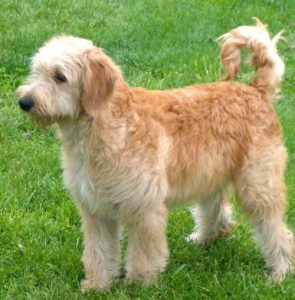
Breed Profile: Goldendoodle

Goldendoodles get their names from their mixed heritage of Golden Retriever and Poodle parents. First bred in the early 1990’s as allergy-friendly seeing-eye dogs, Goldendoodles have now become just as popular as family companions and embody the best personality traits of both of their highly popular parent breeds.

Physical Traits

Size & Weight: Goldendoodles are a range of sizes including standard, medium, and miniature (if the Poodle parent was a miniature). Standard Goldendoodles stand at 22-26 inches at the shoulder and weigh between 45-70 pounds. Medium Goldendoodles weigh between 30-45 pounds, and miniatures weigh between 15-30 pounds.

Coat & Color: Goldendoodles can be any mix of cream, gold, tan, brown, grey, or black. Many Goldendoodles inherit the fur qualities of their Poodle parent, but not the texture, so they shed very little, if at all.

Life Expectancy: 15 years

Temperament

Golden Retrievers and Poodles have much in common temperament-wise—both are great family dogs, friendly, highly intelligent, affectionate, and easy to train. With these overlapping character traits, you can see why the Goldendoodle makes such a great companion. Because the Goldendoodle is a very human-orientated dog, they develop strong bonds with their human companions and show lots of affection. They are also very calm and patient dogs, which makes them great with children.

Something to Bark About: Poodles are ranked as the 2nd smartest dog breed in the world, and Golden Retrievers are ranked 4th. With those genes, you could say the Goldendoodle is one of the great intellectuals of the dog world!

Wags

September 24, 2012 by Mary Lou Davidson

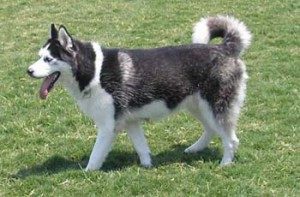
Breed Profile: Siberian Husky

One of the oldest breed of dogs in the world, Siberian Huskies originate from Siberia, where they were bred to pull heavy loads across harsh, freezing conditions. Once they made it to Alaska during the Gold Nome Rush, Huskies became famous for their dog sledding abilities, but did you know that their outgoing and gentle personalities make them suitable for much more than sledding?

Physical Traits

Size & Weight: Male Huskies stand between 21-23.5 inches at the withers, and females are smaller at 20-22 inches. They weight between 35-60 pounds, with males generally being heavier than females.

Coat & Color: Huskies have very thick coats that consist of two layers which keep them warm in the Arctic winters and reflect heat in the summers. Their undercoat is dense, while the topcoat is longer and has short, straight hairs. Huskies come in all colors from black to pure white, and often have distinctive markings on the head that are not found in other breeds.

Life Expectancy: 12-15 years

Temperament

Huskies are intelligent dogs that enjoy learning new things, and with some obedience training they do well as family pets. They are generally happy, playful dogs who love spending time with their families. Because of their gentle, trusting nature they do not make the best guard dogs, but will always be your best friend (and your best friend’s best friend too!).

Something to Bark About: In 1908 Siberian Huskies were used in the very first All-Alaska Sweepstakes, a 408 mile dog sled race from Nome, to Candle, and back to Nome, where they immediately dominated the race. In addition to their unmatched sledding skills, they have often been used in many different ways to service people—transporting medicine to the ill during a diphtheria epidemic in 1925, accompanying Admiral Byrd on his Arctic expeditions in the early to mid-1900’s, and serving in the Army’s Arctic Search and Rescue Unit during World War II.

Wags

  • With proper training, Siberian Huskies make excellent family pets, as they are loyal and loving with people.
  • Huskies are very gentle and laid-back, and do well with children.
  • Huskies bark very little, although they do let out the occasional howl.

Yelps

  • Huskies have strong predatory instincts, so they should be closely supervised around small animals.
  • Huskies are great escape artists who can climb chain-linked fences and find other creative means of escape.
  • Siberian Huskies are easily bored and require daily mental stimulation and physical activity to keep them from exhibiting destructive behaviors.

If you’d like to learn more about adoptable Siberian Huskies in Florida, visit Siberian Husky Rescue of Florida for more information.

August 21, 2012 by Mary Lou Davidson

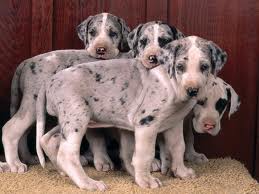
Breed Profile: Great Dane

Known as the “Apollo of all dogs,” Great Danes are a very old breed dating back to the ancient Egyptians and Chinese. Drawings of dogs resembling the Great Dane appear on Egyptian monuments and currency from 3000 B.C., and descriptions a similar dog can be found in Chinese literature from 1121 B.C. With their huge size and regal appearance, Great Danes are a majestic and striking breed that makes for an imposing dog. In reality, Great Danes are really just “Gentle Giants” who are friendly and attentive with their families.

Physical Traits

Size & Weight: Male Great Danes stand between 30-34 inches at the shoulders, and females between 28-32 inches. A Great Dane’s weight can range from 100-200 pounds depending on gender, and males should have a very masculine appearance, while females should appear finer boned and more feminine.

Coat & Color: A Great Dane’s coat is short and thick with a glossy appearance. Their color can be any one of six variations: fawn, brindle, blue, black, harlequin, and mantle.

Life Expectancy: 7-10 years

Temperament

Great Danes can be intimidating at first sight, but they truly live up to their nickname of “Gentle Giant.” A very friendly dog, they are gentle and loving towards people and other animals, and show great patience with children. Their charming personalities make for a great family pet, but they also possess the courage and spirit needed in a watchdog.

Something to Bark About: Over the years Great Danes have held the record for world’s largest dog many different times. The current record holder, Giant George, is a blue Great Dane who stands at 43 inches (that’s over 3 ½ feet)!

Wags

  • Great Danes are trustworthy, dependable dogs who can be counted on to love and defend their families.
  • Great Danes are easy to groom and are not excessive shedders.
  • Great Danes get along well with children, adults, and other animals, as long as they are properly socialized at a young age.

Yelps

  • Great Danes are prone to congenital heart problems and have short life-spans, giving them the nickname “The Heartbreak Breed.”
  • Because their bones grow so quickly they are at risk for bone and joint problems, and should not be over-exercised, especially while they are young and still growing.
  • Great Danes require consistent training and rules from a young age so that they learn not to jump or lean on people.

If you’d like to learn more about adopting one of these Gentle Giants in our area, visit the Great Dane Rescue of Southwest Florida for more information.

August 14, 2012 by Mary Lou Davidson

Breed Profile: Puggle

So what do you get when you cross a Pug with a Beagle? Why, a Puggle of course! These adorable wrinkled hounds are a “designer” breed of dog that were first bred in the 1980’s when dog breeder Wallace Haven bred a male Pug with a female Beagle.  They are currently the most popular crossbreed ever, and with their endless energy and sweet dispositions it’s no wonder why!

Physical Traits

Size & Weight: Puggles generally stand between 10-15 inches at the shoulders, and weigh between 15-30 pounds. They are relatively small dogs with thick-set bodies, and males are usually larger and more muscular than females.

Coat & Color: Puggles have short, smooth coats that come in a variety of colors. The most common color combination is fawn or tan with a black mask (like their Pug parent), but they can also be all black, white, or tri-colored. Their foreheads are deeply wrinkled, another trait inherited from the Pug.

Life Expectancy: 10-15 years

Temperament

While cross breeding can result in any combination of characteristics found in the original breeds, Puggle parents insist that Puggles truly inherit the best of both Pugs and Beagles. They are very sweet-natured, affectionate, and extremely social dogs. They love to be close to their families, and will often follow you around the house from room to room, and happily greet you when you get home. And it’s not just people that they love—Puggles love making new dog friends at the park, and will even buddy up with the family cat. You could say a Puggle has never met a stranger!

Something to Bark About: First generation Puggles are bred from a purebred Pug and a purebred Beagle. These pups usually have the fawn coloring with black masks. Second generation Puggles are bred from two Puggle parents, and can result in lots of color variations. Because the size of the pups can make births difficult for Pug moms, usually the mother dog is a Beagle and the father a Pug.

Wags

  • Puggles have coats that are easy to care for and require minimal grooming.
  • Puggles love people of all ages, as well as other animals.
  • Because they are treat motivated Puggles are easy to train, and will easily learn all the basic commands of sit, stay, fetch, and roll over.

Yelps

  • Potty training can sometimes be a challenge. It’s important to use reward and repetition, as Puggles can be stubborn puppies.
  • Because they are so social, some Puggles may bark at the slightest noise or a knock at the door (what dog doesn’t?), and may even howl every now and then, but it’s only because they want to say hello!

If you’d like to learn more about adoptable Puggles in your area, visit Petfinder.com for more information.

June 26, 2012 by Mary Lou Davidson

Breed Profile: Boston Terrier

By Alisha Corsi

With their refined personalities and dapper tuxedo markings, Boston Terriers are known as the “American Gentlemen” of dog breeds. Originating in the stables of Boston (where else would they?), Boston Terriers were the first US breed to be recognized by the American Kennel Club, making them the all-American dog!

Physical Traits

Size & Weight: Boston Terriers stand between 15-17 inches at the shoulder, and weigh between 10-25 pounds. They are small, compact dogs with short muzzles and square faces.

Coat & Color: Boston Terriers have short, smooth coats that are most often brindle, seal, or black with even white markings on the face and chest. “Seal” is a color that is exclusive to Boston Terriers, and refers to a black color that reveals red highlights in the sun. Boston Terriers can also be liver, brown, cream, or red, but these are rare.

Life Expectancy: 11-13 years

Temperament
Boston Terriers are gentle, well-mannered dogs with happy-go-lucky personalities. They love their human companions, and are always eager to please. Highly intelligent dogs, Boston Terriers are easy to train and are usually enthusiastic about learning new things. Because of their affectionate personalities and excellent character, Boston Terriers are extremely popular in the United States.

Something to Bark About: The American Kennel Club breed standards state that Boston Terriers should be wrinkle-free—be grateful that we’re not all held to that standard! The Boston Terrier serves as the mascot for not one, but two institutions of higher education in the US—Wofford College in South Carolina, and of course, Rhett the Boston Terrier at Boston University.
Wags
• Boston Terriers get along well with children, elderly people, and animals.
• Boston Terriers are easy keepers who require only a moderate amount of exercise and a minimum amount of grooming.
• Boston Terriers learn very quickly, and have very affable personalities.

Yelps
• Like most pure dog breeds, Boston Terriers are prone to some health issues, including eye problems, heart murmurs, and allergies.
• Their compact body type causes a few challenges that can also be seen as endearing—they can be quite flatulent in the absence of a proper diet, and their shortened muzzles make them prone to snoring. Nothing a little Febreze and ear plugs can’t cure!

If you’d like to learn more about adoptable Boston Terriers in your area, visit Boston Terrier Rescue of Florida for more information.

  • Go to page 1
  • Go to page 2
  • Go to Next Page »

Primary Sidebar

Categories

  • Adoptable Dogs
  • Breed Profile
  • Dog News
  • Dog-Friendly Properties
  • Events
  • Featured Post
  • Medical News
  • My Green Dog
  • Podcasts
  • Resources
  • Right Front
  • Uncategorized
Bayside Pet Resort | Bradenton Dog
Pet Suites Daycare | BradeontonDog.com


http://pawprintsid.com

https://urgentvet.com

Footer

About

BradentonDog.com is dedicated to the dogs and dog owners of Bradenton! We’ll do our best to keep you up-to-date on local activities and all things dog in town. From time to time we’ll also cover national news that we think is of particular interest. Read More…

Recent Posts

  • CrockPot Cooking for your Pup
  • Dog Mountain
  • Breed Profile: Shepherd Husky Mix
  • Breed Profile: German Shorthaired Pointer
  • Calling All Advocates – Urgent Meeting Tomorrow 4/23/19

Copyright © 2026 Bradenton Dog.