• Skip to primary navigation
  • Skip to main content
  • Skip to primary sidebar
  • Skip to footer
  • About
  • Emergency
  • Shelters
  • Books
  • Calendar
  • Doggie Directory
    • Animal Communications
    • Boarding
    • Grooming
    • Agility Classes
    • Animal Ambulance and Pet Taxi
    • Artists
    • Daycare
    • Dining with Your Dog
    • Dog Food and Supplies
    • Memorial
    • My Green Dog
    • Pet Sitting
    • Photographers
    • Training
    • Veterinarians
  • Parks
  • Recipes
  • Product Reviews
  • Resources
  • Advertise

Bradenton Dog

  • Home
  • Adoptable Dogs
  • Breed Profile
  • Dog News
  • Dog-Friendly Properties
  • Events
  • Medical News
  • My Green Dog
  • Podcasts
  • Resources

rescue

April 6, 2016 by Mary Lou Davidson

Breed Profile: Yorkshire Terrier

by Lauren R. Tharp

Known as “Yorkies” to those who love them, the Yorkshire Terrier originated in Yorkshire, England (how appropriate, no?) where they were originally used to catch rats in clothing mills. Perky, fun, and utterly adorable, this toy breed was first recognized by the AKC in 1885 and currently reigns as the third most popular dog in the United States.

Physical Traits

Size & Weight: Extremely small, even by Toy breed standards. Yorkies are generally 5-7 inches in height and weigh a mere 3-7 pounds. “Teacup” Yorkshire Terriers can be even smaller than that!

Coat & Color: Colors are black and tan or “steel blue” and tan. Their hair is long, straight, and incredibly silky. Many Yorkies have hair that reaches all the way down to the floor.

Other: A Yorkshire Terrier named Smoky was a war hero (with the 5th Air Force in the South Pacific) during World War II. Smoky was also the first therapy dog!

Life Expectancy: 14-16 years.

Temperament

Intelligent and energetic, Yorkies are incredibly loyal to their owners and, although they don’t require much exercise due to their small size, they need daily interaction with their preferred human. Quick to adapt to almost any surrounding, Yorkshire Terriers are affectionate, fun, agile, and intensely curious.

Wags

  • Easy to train.
  • Excellent watchdogs.
  • Requires very little exercise.

Yelps

  • Grooming needs for this breed are high.
  • If not properly socialized at a young age, Yorkies can become yappy—or worse: snappy!—with strangers.
  • Yorkshire Terriers were originally ratters and those instincts still run strong within the breed today, often making them unsuitable around small animals (especially rodents such as mice, rats, and hamsters).

Do you think the Yorkshire Terrier would be the perfect addition to your family? Check your local animal shelter and/or rescue groups like the Florida Yorkie Rescue.

September 24, 2012 by Mary Lou Davidson

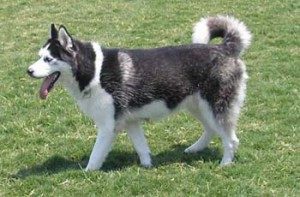
Breed Profile: Siberian Husky

One of the oldest breed of dogs in the world, Siberian Huskies originate from Siberia, where they were bred to pull heavy loads across harsh, freezing conditions. Once they made it to Alaska during the Gold Nome Rush, Huskies became famous for their dog sledding abilities, but did you know that their outgoing and gentle personalities make them suitable for much more than sledding?

Physical Traits

Size & Weight: Male Huskies stand between 21-23.5 inches at the withers, and females are smaller at 20-22 inches. They weight between 35-60 pounds, with males generally being heavier than females.

Coat & Color: Huskies have very thick coats that consist of two layers which keep them warm in the Arctic winters and reflect heat in the summers. Their undercoat is dense, while the topcoat is longer and has short, straight hairs. Huskies come in all colors from black to pure white, and often have distinctive markings on the head that are not found in other breeds.

Life Expectancy: 12-15 years

Temperament

Huskies are intelligent dogs that enjoy learning new things, and with some obedience training they do well as family pets. They are generally happy, playful dogs who love spending time with their families. Because of their gentle, trusting nature they do not make the best guard dogs, but will always be your best friend (and your best friend’s best friend too!).

Something to Bark About: In 1908 Siberian Huskies were used in the very first All-Alaska Sweepstakes, a 408 mile dog sled race from Nome, to Candle, and back to Nome, where they immediately dominated the race. In addition to their unmatched sledding skills, they have often been used in many different ways to service people—transporting medicine to the ill during a diphtheria epidemic in 1925, accompanying Admiral Byrd on his Arctic expeditions in the early to mid-1900’s, and serving in the Army’s Arctic Search and Rescue Unit during World War II.

Wags

  • With proper training, Siberian Huskies make excellent family pets, as they are loyal and loving with people.
  • Huskies are very gentle and laid-back, and do well with children.
  • Huskies bark very little, although they do let out the occasional howl.

Yelps

  • Huskies have strong predatory instincts, so they should be closely supervised around small animals.
  • Huskies are great escape artists who can climb chain-linked fences and find other creative means of escape.
  • Siberian Huskies are easily bored and require daily mental stimulation and physical activity to keep them from exhibiting destructive behaviors.

If you’d like to learn more about adoptable Siberian Huskies in Florida, visit Siberian Husky Rescue of Florida for more information.

August 28, 2012 by Mary Lou Davidson

Breed Profile: Coton de Tulear

With a name like Coton de Tulear you would expect a dog as fancy as their name, and they are! Favored by the royals and wealthy upper-class of Madagascar, Coton de Tulears, or “Cotons”, have been living lives of luxury in France and Madagascar since the 16th century. They are known as the “Royal Dog of Madagascar,” but don’t let their aristocratic roots fool you—Cotons are a happy and playful breed of dog without airs, who love nothing more than spending a fun day with the family (wealthy or not).

Physical Traits

Size & Weight: Cotons typically stand between 10-12 inches tall, making them small dogs. They should weigh between 12-15 pounds. Male Cotons are typically larger than females.

Coat & Color:  The Coton’s coat is their most distinctive characteristic, and is where their name derives from. They have medium to long, flowing coats that are actually hair, rather than fur, that is very soft and fluffy, like cotton.  Cotons can be white (sometimes with tan markings), white and black, or tricolored.

Life Expectancy: 14-16 years

Temperament

Cotons are happy dogs that are full of energy, with witty, lighthearted personalities. They are known for their expressive “joie de vivre” faces, which always seem to be smiling. Highly intelligent dogs, they love learning new commands and tricks. Cotons are not always clowns though—they also have a serious side, and possess a striking sensitivity and awareness to those around them, often expressing this with unique vocalizations. They develop strong attachments to their home and family, making them surprisingly great watchdogs. Because they get along with everyone, human or animal, Cotons make great family pets.

Something to Bark About: Cotons are full of tricks and entertaining behaviors—one of their trademark traits is to jump and walk on their hind legs.  Perhaps they learned this from the court jesters during their time with the Madagascan royals?

Wags:

  • Because they have hair instead of fur, Cotons have little to no shedding and are considered hypoallergenic.
  • Cotons do well with apartment living, as they are fairly active indoors.
  • Cotons love people and other animals, and do well when meeting new people.

Yelps:

  • Grooming is a daily task when it comes to Cotons. Their hair mats easily, and needs to be carefully brushed every day.
  • Cotons can be a little stubborn without proper training and leadership.
  • Because Cotons are still a fairly rare breed, it’s unlikely that you will find one through a rescue organization or shelter. Cotons can be expensive when purchased from a breeder, reaching up to $3000 per dog.

Want to welcome a jovial Coton de Tulear into your home? Try finding one at one of your local small dog rescue groups at RightPet.com.

August 21, 2012 by Mary Lou Davidson

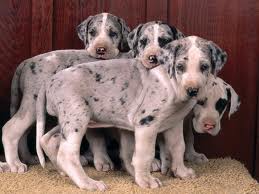
Breed Profile: Great Dane

Known as the “Apollo of all dogs,” Great Danes are a very old breed dating back to the ancient Egyptians and Chinese. Drawings of dogs resembling the Great Dane appear on Egyptian monuments and currency from 3000 B.C., and descriptions a similar dog can be found in Chinese literature from 1121 B.C. With their huge size and regal appearance, Great Danes are a majestic and striking breed that makes for an imposing dog. In reality, Great Danes are really just “Gentle Giants” who are friendly and attentive with their families.

Physical Traits

Size & Weight: Male Great Danes stand between 30-34 inches at the shoulders, and females between 28-32 inches. A Great Dane’s weight can range from 100-200 pounds depending on gender, and males should have a very masculine appearance, while females should appear finer boned and more feminine.

Coat & Color: A Great Dane’s coat is short and thick with a glossy appearance. Their color can be any one of six variations: fawn, brindle, blue, black, harlequin, and mantle.

Life Expectancy: 7-10 years

Temperament

Great Danes can be intimidating at first sight, but they truly live up to their nickname of “Gentle Giant.” A very friendly dog, they are gentle and loving towards people and other animals, and show great patience with children. Their charming personalities make for a great family pet, but they also possess the courage and spirit needed in a watchdog.

Something to Bark About: Over the years Great Danes have held the record for world’s largest dog many different times. The current record holder, Giant George, is a blue Great Dane who stands at 43 inches (that’s over 3 ½ feet)!

Wags

  • Great Danes are trustworthy, dependable dogs who can be counted on to love and defend their families.
  • Great Danes are easy to groom and are not excessive shedders.
  • Great Danes get along well with children, adults, and other animals, as long as they are properly socialized at a young age.

Yelps

  • Great Danes are prone to congenital heart problems and have short life-spans, giving them the nickname “The Heartbreak Breed.”
  • Because their bones grow so quickly they are at risk for bone and joint problems, and should not be over-exercised, especially while they are young and still growing.
  • Great Danes require consistent training and rules from a young age so that they learn not to jump or lean on people.

If you’d like to learn more about adopting one of these Gentle Giants in our area, visit the Great Dane Rescue of Southwest Florida for more information.

June 26, 2012 by Mary Lou Davidson

Breed Profile: Boston Terrier

By Alisha Corsi

With their refined personalities and dapper tuxedo markings, Boston Terriers are known as the “American Gentlemen” of dog breeds. Originating in the stables of Boston (where else would they?), Boston Terriers were the first US breed to be recognized by the American Kennel Club, making them the all-American dog!

Physical Traits

Size & Weight: Boston Terriers stand between 15-17 inches at the shoulder, and weigh between 10-25 pounds. They are small, compact dogs with short muzzles and square faces.

Coat & Color: Boston Terriers have short, smooth coats that are most often brindle, seal, or black with even white markings on the face and chest. “Seal” is a color that is exclusive to Boston Terriers, and refers to a black color that reveals red highlights in the sun. Boston Terriers can also be liver, brown, cream, or red, but these are rare.

Life Expectancy: 11-13 years

Temperament
Boston Terriers are gentle, well-mannered dogs with happy-go-lucky personalities. They love their human companions, and are always eager to please. Highly intelligent dogs, Boston Terriers are easy to train and are usually enthusiastic about learning new things. Because of their affectionate personalities and excellent character, Boston Terriers are extremely popular in the United States.

Something to Bark About: The American Kennel Club breed standards state that Boston Terriers should be wrinkle-free—be grateful that we’re not all held to that standard! The Boston Terrier serves as the mascot for not one, but two institutions of higher education in the US—Wofford College in South Carolina, and of course, Rhett the Boston Terrier at Boston University.
Wags
• Boston Terriers get along well with children, elderly people, and animals.
• Boston Terriers are easy keepers who require only a moderate amount of exercise and a minimum amount of grooming.
• Boston Terriers learn very quickly, and have very affable personalities.

Yelps
• Like most pure dog breeds, Boston Terriers are prone to some health issues, including eye problems, heart murmurs, and allergies.
• Their compact body type causes a few challenges that can also be seen as endearing—they can be quite flatulent in the absence of a proper diet, and their shortened muzzles make them prone to snoring. Nothing a little Febreze and ear plugs can’t cure!

If you’d like to learn more about adoptable Boston Terriers in your area, visit Boston Terrier Rescue of Florida for more information.

April 12, 2012 by Mary Lou Davidson

April 25th: Pet Parents Day!

For all the poop they’ve scooped and the treats they’ve given, Pet Parent’s Day on Sunday, April 25, celebrates those who lovingly consider their pets part of the family. Veterinary Pet Insurance Co. (VPI), the nation’s oldest and largest provider of pet health insurance, commemorates the occasion by offering free customizable Pet Parent’s Day e-cards on its Facebook page, and donating up to $10,000 to One Dog Rescue, a non-profit organization dedicated to rescuing old, sick and forgotten pets who are looking for pet parents of their own.

Throughout the month of April, visitors to VPI’s Facebook page can customize a free Pet Parent’s Day e-card to send to their pet loving friends. Visitors can select among creative and fun dog, cat, bird and exotic pet illustrations, or upload a photo of their favorite furry friend. Senders will also be able to compose a personalized message on each e-card to pet parent recipients. Both senders and recipients can share the finished Pet Parent’s Day e-card with family and friends on Facebook.

Additionally, VPI will donate $5 (up to $10,000) to One Dog Rescue for every pet insurance quote generated at PetParentsDay.com during the month of April. One Dog Rescue is a non-profit organization dedicated to rescuing old, sick, injured and forgotten pets, many of whom are on the short list to be euthanized.

“For many people, pets are part of the family,” said Curtis Steinhoff, director of corporate communications for VPI. “Over the years, pets have gone from the backyard, to the living room, to many times getting their own space in the bedroom with us. The human-animal bond has never been stronger, and we feel it is important to set aside a day to recognize the special commitment made by pet parents.”

About Veterinary Pet Insurance
With more than 485,000 pets insured nationwide, Veterinary Pet Insurance Co./DVM Insurance Agency is the No. 1 veterinarian-recommended pet health insurance company and is a member of the Nationwide Insurance family of companies. Providing pet owners with peace of mind since 1982, the company is committed to being the trusted choice of America’s pet lovers and an advocate of pet health education. VPI Pet Insurance plans cover dogs, cats, birds and exotic pets for multiple medical problems and conditions relating to accidents, illnesses and injuries. Optional CareGuard® coverage is available for routine care. Medical plans are available in all 50 states and the District of Columbia. More than 2,700 companies nationwide offer VPI Pet Insurance as an employee benefit. Policies are underwritten by Veterinary Pet Insurance Company in California and in all other states by National Casualty Company, an A+15 rated company in Madison, Wisconsin. Pet owners can find VPI Pet Insurance on Facebook or follow @VPI on Twitter. For more information about VPI Pet Insurance, call 800-USA-PETS (800-872-7387) or visit petinsurance.com.


  • Go to page 1
  • Go to page 2
  • Go to Next Page »

Primary Sidebar

Categories

  • Adoptable Dogs
  • Breed Profile
  • Dog News
  • Dog-Friendly Properties
  • Events
  • Featured Post
  • Medical News
  • My Green Dog
  • Podcasts
  • Resources
  • Right Front
  • Uncategorized
Bayside Pet Resort | Bradenton Dog
Pet Suites Daycare | BradeontonDog.com


http://pawprintsid.com

https://urgentvet.com

Footer

About

BradentonDog.com is dedicated to the dogs and dog owners of Bradenton! We’ll do our best to keep you up-to-date on local activities and all things dog in town. From time to time we’ll also cover national news that we think is of particular interest. Read More…

Recent Posts

  • CrockPot Cooking for your Pup
  • Dog Mountain
  • Breed Profile: Shepherd Husky Mix
  • Breed Profile: German Shorthaired Pointer
  • Calling All Advocates – Urgent Meeting Tomorrow 4/23/19

Copyright © 2026 Bradenton Dog.