• Skip to primary navigation
  • Skip to main content
  • Skip to primary sidebar
  • Skip to footer
  • About
  • Emergency
  • Shelters
  • Books
  • Calendar
  • Doggie Directory
    • Animal Communications
    • Boarding
    • Grooming
    • Agility Classes
    • Animal Ambulance and Pet Taxi
    • Artists
    • Daycare
    • Dining with Your Dog
    • Dog Food and Supplies
    • Memorial
    • My Green Dog
    • Pet Sitting
    • Photographers
    • Training
    • Veterinarians
  • Parks
  • Recipes
  • Product Reviews
  • Resources
  • Advertise

Bradenton Dog

  • Home
  • Adoptable Dogs
  • Breed Profile
  • Dog News
  • Dog-Friendly Properties
  • Events
  • Medical News
  • My Green Dog
  • Podcasts
  • Resources

training

April 6, 2016 by Mary Lou Davidson

Breed Profile: Yorkshire Terrier

by Lauren R. Tharp

Known as “Yorkies” to those who love them, the Yorkshire Terrier originated in Yorkshire, England (how appropriate, no?) where they were originally used to catch rats in clothing mills. Perky, fun, and utterly adorable, this toy breed was first recognized by the AKC in 1885 and currently reigns as the third most popular dog in the United States.

Physical Traits

Size & Weight: Extremely small, even by Toy breed standards. Yorkies are generally 5-7 inches in height and weigh a mere 3-7 pounds. “Teacup” Yorkshire Terriers can be even smaller than that!

Coat & Color: Colors are black and tan or “steel blue” and tan. Their hair is long, straight, and incredibly silky. Many Yorkies have hair that reaches all the way down to the floor.

Other: A Yorkshire Terrier named Smoky was a war hero (with the 5th Air Force in the South Pacific) during World War II. Smoky was also the first therapy dog!

Life Expectancy: 14-16 years.

Temperament

Intelligent and energetic, Yorkies are incredibly loyal to their owners and, although they don’t require much exercise due to their small size, they need daily interaction with their preferred human. Quick to adapt to almost any surrounding, Yorkshire Terriers are affectionate, fun, agile, and intensely curious.

Wags

  • Easy to train.
  • Excellent watchdogs.
  • Requires very little exercise.

Yelps

  • Grooming needs for this breed are high.
  • If not properly socialized at a young age, Yorkies can become yappy—or worse: snappy!—with strangers.
  • Yorkshire Terriers were originally ratters and those instincts still run strong within the breed today, often making them unsuitable around small animals (especially rodents such as mice, rats, and hamsters).

Do you think the Yorkshire Terrier would be the perfect addition to your family? Check your local animal shelter and/or rescue groups like the Florida Yorkie Rescue.

September 24, 2012 by Mary Lou Davidson

Breed Profile: Siberian Husky

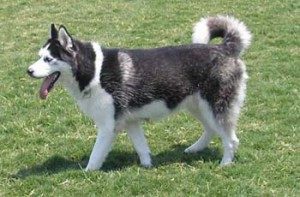
One of the oldest breed of dogs in the world, Siberian Huskies originate from Siberia, where they were bred to pull heavy loads across harsh, freezing conditions. Once they made it to Alaska during the Gold Nome Rush, Huskies became famous for their dog sledding abilities, but did you know that their outgoing and gentle personalities make them suitable for much more than sledding?

Physical Traits

Size & Weight: Male Huskies stand between 21-23.5 inches at the withers, and females are smaller at 20-22 inches. They weight between 35-60 pounds, with males generally being heavier than females.

Coat & Color: Huskies have very thick coats that consist of two layers which keep them warm in the Arctic winters and reflect heat in the summers. Their undercoat is dense, while the topcoat is longer and has short, straight hairs. Huskies come in all colors from black to pure white, and often have distinctive markings on the head that are not found in other breeds.

Life Expectancy: 12-15 years

Temperament

Huskies are intelligent dogs that enjoy learning new things, and with some obedience training they do well as family pets. They are generally happy, playful dogs who love spending time with their families. Because of their gentle, trusting nature they do not make the best guard dogs, but will always be your best friend (and your best friend’s best friend too!).

Something to Bark About: In 1908 Siberian Huskies were used in the very first All-Alaska Sweepstakes, a 408 mile dog sled race from Nome, to Candle, and back to Nome, where they immediately dominated the race. In addition to their unmatched sledding skills, they have often been used in many different ways to service people—transporting medicine to the ill during a diphtheria epidemic in 1925, accompanying Admiral Byrd on his Arctic expeditions in the early to mid-1900’s, and serving in the Army’s Arctic Search and Rescue Unit during World War II.

Wags

  • With proper training, Siberian Huskies make excellent family pets, as they are loyal and loving with people.
  • Huskies are very gentle and laid-back, and do well with children.
  • Huskies bark very little, although they do let out the occasional howl.

Yelps

  • Huskies have strong predatory instincts, so they should be closely supervised around small animals.
  • Huskies are great escape artists who can climb chain-linked fences and find other creative means of escape.
  • Siberian Huskies are easily bored and require daily mental stimulation and physical activity to keep them from exhibiting destructive behaviors.

If you’d like to learn more about adoptable Siberian Huskies in Florida, visit Siberian Husky Rescue of Florida for more information.

August 21, 2012 by Mary Lou Davidson

Breed Profile: Great Dane

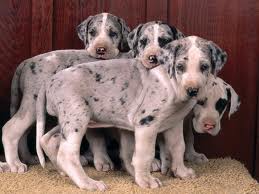
Known as the “Apollo of all dogs,” Great Danes are a very old breed dating back to the ancient Egyptians and Chinese. Drawings of dogs resembling the Great Dane appear on Egyptian monuments and currency from 3000 B.C., and descriptions a similar dog can be found in Chinese literature from 1121 B.C. With their huge size and regal appearance, Great Danes are a majestic and striking breed that makes for an imposing dog. In reality, Great Danes are really just “Gentle Giants” who are friendly and attentive with their families.

Physical Traits

Size & Weight: Male Great Danes stand between 30-34 inches at the shoulders, and females between 28-32 inches. A Great Dane’s weight can range from 100-200 pounds depending on gender, and males should have a very masculine appearance, while females should appear finer boned and more feminine.

Coat & Color: A Great Dane’s coat is short and thick with a glossy appearance. Their color can be any one of six variations: fawn, brindle, blue, black, harlequin, and mantle.

Life Expectancy: 7-10 years

Temperament

Great Danes can be intimidating at first sight, but they truly live up to their nickname of “Gentle Giant.” A very friendly dog, they are gentle and loving towards people and other animals, and show great patience with children. Their charming personalities make for a great family pet, but they also possess the courage and spirit needed in a watchdog.

Something to Bark About: Over the years Great Danes have held the record for world’s largest dog many different times. The current record holder, Giant George, is a blue Great Dane who stands at 43 inches (that’s over 3 ½ feet)!

Wags

  • Great Danes are trustworthy, dependable dogs who can be counted on to love and defend their families.
  • Great Danes are easy to groom and are not excessive shedders.
  • Great Danes get along well with children, adults, and other animals, as long as they are properly socialized at a young age.

Yelps

  • Great Danes are prone to congenital heart problems and have short life-spans, giving them the nickname “The Heartbreak Breed.”
  • Because their bones grow so quickly they are at risk for bone and joint problems, and should not be over-exercised, especially while they are young and still growing.
  • Great Danes require consistent training and rules from a young age so that they learn not to jump or lean on people.

If you’d like to learn more about adopting one of these Gentle Giants in our area, visit the Great Dane Rescue of Southwest Florida for more information.

April 9, 2012 by Mary Lou Davidson

Breed Profile: Boxer

by Lauren R. Tharp

Originally used for dog fighting, the Boxer would stand on its hind legs, striking out at its opponent with its front paws like, well, a boxer!  Officially recognized as a breed in 1904, the Boxer is currently the 7th most popular breed in the United States.  Many celebrities have taken a liking to Boxers over the years, including Humphrey Bogart and Justin Timberlake.

Physical Traits

Size & Weight:  On the larger end of “medium.”  Boxers typically measure 20-25 inches at the shoulder (with the females being on the smaller end of the scale) and weigh around 50-70 pounds.  They’re very muscular.

Coat & Color:  Smooth, coarse, short hair in either fawn/red or brindle coloring.  They can also come with a black mask and/or white markings.

Other:  “White” Boxers are fairly common.  However, they are actually considered to be a “fawn” or “brindle” dog with overly excessive white markings rather than a truly “white” dog.

Life Expectancy:  8-12 years.

Temperament

The top five character traits of a Boxer?  Alert, loyal, curious, brave, and very playful.  Boxers are equally at home in the role of a watchdog or bouncing around out back with the kids.  However, this breed can also be trouble if the owner isn’t confident enough to handle it.  This is a dog who likes to know who’s boss—and may challenge you for the title!  But, with the right amount of training and love, you could end up with a wonderful pet you won’t soon forget.

Wags

  • Little grooming needed.
  • Patient with children, even younger ones.  (Though be sure to supervise any early interaction until your Boxer is properly trained).  Boxers are known for loving kids and going out of their way to keep them happy and safe.
  • Highly excellent watch dogs.

Challenges

  • Not the best dog for first-time owners.  Boxers require a confident owner who’s willing to put in the time and effort into rigorous obedience training.
  • Early socialization is a must.  Got someone (human/pet/other) you want your Boxer to like?  Better introduce them to each other now!
  • Rowdy, slobbering, and prone to snoring.

If you are looking for a Boxer in your area, please check your local shelters or visit Florida Boxer Rescue.

March 26, 2012 by Mary Lou Davidson

Rottweiler Profile

by Lauren R. Tharp

Opinions of Rottweilers vary wildly.  While many remember Alexandra Day’s Good Dog, Carl children’s book series, still more remember the breed as the “evil” dogs from The Omen.

The one thing everyone seems to agree on?  Rottweilers make excellent guard dogs!  Most commonly used as guard dogs, this breed is also commonly used for Police work, search and rescue, and sometimes as guide dogs for the blind.  Officially recognized by the AKC in 1931, Rottweilers are currently the 16th most popular breed in the United States.

Physical Traits

Size & Weight:  Large. Definitely large. Rottweilers grow to be 22-28 inches at the shoulder and can weigh 90-140 pounds!

Coat & Color:  The Rottweiler’s coloring is so “classic,” you’re probably already familiar with it, even if you didn’t know you were looking at Rottweiler at the time.  Their black coats with rust markings are so recognizable, it makes you say, “Oh, it’s one of those dogs…”  As for the texture of the breed’s coat:  It’s coarse, dense, and generally very straight.  Rottweilers have medium-length hair with thicker “undercoats” on their necks and thighs.

Other:  This breed sometimes has their tails docked (stubby tails).  Tail docking for this breed is most common in the United States and New Zealand.

Life Expectancy:  8-12 years.

Temperament:

Rottweilers are so known for being difficult, that the AKC itself has accepted it as simply a part of the breed personality, stating, “An aloof or reserved [Rottweiler] should not be penalized, as this reflects the accepted character of the breed. An aggressive or belligerent attitude towards other dogs should not be faulted.”  What’s that?  “Aggressive or belligerent?!”  Well…yes.  Rottweilers can have that temperament.  But Rotties can also be calm, loyal, brave, and hard-working.  With extensive training and early socialization, this breed can make a lovely pet.  If you’re willing to put in the time and effort, your dog will too!

Wags:

  • Excellent guard dogs.
  • Grooming needs are minimal.
  • If you’re highly athletic and enjoy running or swimming on a regular basis, a Rottweiler will definitely be able to keep up with you. (They require daily exercise!)

Challenges:

  • Their reputation precedes them…  Unfortunately, since Rottweilers have gotten such a bad rap over the years, many insurance companies have been refusing to insure homeowners with Rotties as pets.  Check your policy!
  • They get bored very easily.  This can lead to destructive behavior of the house-thrashing variety.
  • NOT for first-time owners. Rottweilers require a good deal amount of obedience training and socialization.  They need an owner who is as confident, strong-willed, and hard-working as they are.

If you are looking for a Rottweiler, please check your local shelters or visit : Adopt a Rottweiler

November 7, 2011 by Mary Lou Davidson

Breed Profile: Chihuahua

Chihuahua Profile by Lauren R. Tharp

The Chihuahua: Little Dogs with Big Attitudes

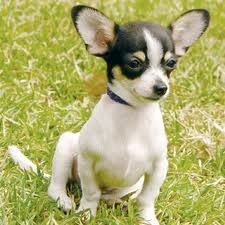
While Chihuahuas don’t actually have Mexican accents like they do in the movies and on television, they do originate from Mexico. Chihuahua, Mexico, to be specific (go figure?). Recognized by the AKC in 1904, Chihuahuas are estimated to be the oldest—and smallest!—breed to originate in the Americas.

The Chihuahua is now the 11th most popular dog in the United States according to AKC registration records.

Physical Traits

Size & Weight
: The Chihuahua is a Toy breed. An actual “show” Chihuahua is not to exceed six (6) pounds in weight, but pet Chihuahuas can get up to 10-12 pounds and still be considered “healthy.”

Coat & Color:


Most have short coats, but some have longer coats that are “flat” or “curly” in texture. Chihuahuas are generally made up of solid colors, or marked and spotted with color on a white background.

Other: We all know that Chihuahuas are small, but Chihuahuas are also typically known for their apple-shaped heads. They’re also very swift and graceful with their movements.

Life Expectancy: 10-12 years.

Temperament

There’s one thing that all the commercials, television programs, movies, and cartoons seem to get exactly right: Chihuahuas have attitude.

Chihuahuas tend to have very high self-esteem and are quite often filled with a sense of self-importance that’s a force to be reckoned with! (If you’re familiar with the term “Napoleon Complex,” then you know exactly what I’m talking about—shorties with attitude!). They’re actually quite similar to many smaller terrier breeds in temperament.

Chihuahuas are also very charming, alert, confident, and surprisingly self-reliant.

Wags:

• Grooming and exercise needs are relatively low

• Chihuahuas are perfect for an urban environment

• Longer lifespan that most dogs

Challenges:

• With their small size, Chihuahuas are the perfect prey for coyotes and other predators. (In my research, I even read of a few cases in which someone’s pet Chihuahua was taken away by an owl!)

• They aren’t the best dog for first-time dog owners. With their bossy attitudes, Chihuahuas require a moderate to high amount of training.

Chihuahuas are fragile. They can live a long time, but it can be tough getting them there! Chihuahuas have bones that break extremely easily and can suffer from eye problems, heart disease,

If you are considering adding a Chihuahua to your family, please visit Chihuahua Rescue for adorable, adoptable dogs.

  • Go to page 1
  • Go to page 2
  • Go to Next Page »

Primary Sidebar

Categories

  • Adoptable Dogs
  • Breed Profile
  • Dog News
  • Dog-Friendly Properties
  • Events
  • Featured Post
  • Medical News
  • My Green Dog
  • Podcasts
  • Resources
  • Right Front
  • Uncategorized
Bayside Pet Resort | Bradenton Dog
Pet Suites Daycare | BradeontonDog.com


http://pawprintsid.com

https://urgentvet.com

Footer

About

BradentonDog.com is dedicated to the dogs and dog owners of Bradenton! We’ll do our best to keep you up-to-date on local activities and all things dog in town. From time to time we’ll also cover national news that we think is of particular interest. Read More…

Recent Posts

  • CrockPot Cooking for your Pup
  • Dog Mountain
  • Breed Profile: Shepherd Husky Mix
  • Breed Profile: German Shorthaired Pointer
  • Calling All Advocates – Urgent Meeting Tomorrow 4/23/19

Copyright © 2026 Bradenton Dog.