• Skip to primary navigation
  • Skip to main content
  • Skip to primary sidebar
  • Skip to footer
  • About
  • Emergency
  • Shelters
  • Books
  • Calendar
  • Doggie Directory
    • Animal Communications
    • Boarding
    • Grooming
    • Agility Classes
    • Animal Ambulance and Pet Taxi
    • Artists
    • Daycare
    • Dining with Your Dog
    • Dog Food and Supplies
    • Memorial
    • My Green Dog
    • Pet Sitting
    • Photographers
    • Training
    • Veterinarians
  • Parks
  • Recipes
  • Product Reviews
  • Resources
  • Advertise

Bradenton Dog

  • Home
  • Adoptable Dogs
  • Breed Profile
  • Dog News
  • Dog-Friendly Properties
  • Events
  • Medical News
  • My Green Dog
  • Podcasts
  • Resources

Breed Profile

June 20, 2012 by Mary Lou Davidson

Breed Profile: Shetland Sheepdog

By Alisha Corsi

One of the brightest dogs in the world, Shetland Sheepdogs, or “Shelties” as they are more commonly called, are known for their keen sense of intelligence and intense loyalty (think of a smaller version of Lassie). As athletic as they are smart, Shelties excel in agility and herding competitions, but are most successful when it comes to winning the hearts of their human families with their loving personalities.

photo by: Kelsee Dupras

Physical Traits

Size & Weight: Shelties stand between 13-16 inches at the shoulder, and weigh between 11-31 pounds, with males generally being larger and heavier than females.

Coat & Color: Shelties have a double coat. Their topcoats are long, straight, and water-repellent, while the undercoat is short, furry, and very dense. Shelties usually shed their coats in clumps, making them easier to groom than other smooth-haired dogs. Their coats come in three different colors: black, blue merle, and sable, with sable being the most common.

Life Expectancy: 12-15 years

Temperament

Shelties are exceptionally intelligent dogs, ranking 6th out of 123 breeds. They learn new commands quickly, obeying a command the first time more than 95% of the time. For this reason Shelties are one of the most successful obedience dogs. They are also herders, and are so adept at it that they can often be found attempting (and often succeeding) at herding people! In addition to their performance skills, Shelties are very devoted and docile dogs who make great family pets. While not as intimidating as some other dog breeds, their intense loyalty to their owners make them excellent watch dogs.

Travis, A Sarasota Dog

Something to Bark About: The original working sheepdogs of Shetland are now extinct, and have been replaced by Border Collies. In fact, the Shetland Sheepdog as it is now known has never been used as a working dog on Shetland, and ironically, these dogs are very rare there!

Wags

  • Shelties may just be the total package when it comes to dogs, possessing brains, beauty, and loyalty—need I say more?
  • Shelties are alert and have a keen sense of understanding.
  • Diverse in their talents, Shelties are great at herding, agility competitions, and simply loving on their families.
  • Great with kids if reared with them from a young age.

Challenges

  • Shelties require lots of exercise and mental stimulation. Ignoring this may lead to the development of bad behaviors, such as excessive barking, nervousness, and phobias.
  • Shelties will herd anything, including cars, so owners must constantly be watchful.
  • Can sometimes be aloof with strangers, so they must be socialized at a young age.

If you’re ready to welcome a Sheltie into your family, find a list of Sheltie rescue groups near you at nationalsheltierescue.org.

Check out this amazing Sheltie we saw at a local pet event.
April 30, 2012 by Mary Lou Davidson

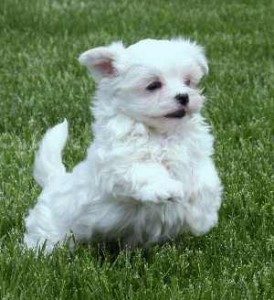
Maltese Profile

by Lauren R. Tharp

The Maltese has one of the most recognizable looks in Toy breeds.  So many people, from Halle Berry to Milhouse from The Simpsons, have recognized the “pet potential” in this gentle, playful, breed; is it any wonder that they’re the 19th most popular breed in America?

Physical Traits

Size & Weight:  Toy.  The Maltese measures 8-10 inches at the shoulder and weighs 3-8 pounds.

Coat & Color:  The Maltese sports long, silky, white hair.  The occasional cream or yellow-ish Maltese may turn up from time to time, but it’s extremely rare.

Other:  While most toy/companion dogs have been “bred down” from larger breeds, the Maltese is the same size now as it was when it first showed up on the scene, over 28 centuries ago!

Life Expectancy:  12-15 years.

Temperament
Like many small dogs, the Maltese boasts a “big dog” personality.  They’ve often been described as “fearless.”  A few other adjectives to describe the breed?  Trusting, playful, loyal, and loving.  The Maltese is a good fit for first-time owners and apartment dwellers.

Wags

  • The Maltese is a great dog when it comes to traveling.
  • Surprisingly, even with their long hair, the Maltese’s grooming needs are fairly moderate.  Bonus!—They tend not to shed.
  • This breed loves to learn tricks!

Challenges

  • While they do make good “watch dogs,” their barking isn’t always selective.  AKA: They sometimes bark “too much.”
  • While their grooming needs are “moderate,” they do tend to need professional grooming.  And pro grooming expenses can add up quickly!
  • Not suitable with small children.

Think the Maltese breed is for you? Check out adoptable Maltese dogs by visiting the Florida Maltese Rescue site.

April 18, 2012 by Mary Lou Davidson

Breed Profile: Welsh Corgi

by Lauren R. Tharp

As the old Welsh term “cor gi” roughly translates to “dwarf dog,” is it any wonder that this lovely herding breed is known primarily for its squat stature?  Popularized in modern times by Queen Elizabeth II and recognized by the American Kennel Club in 1934, the Corgi has been making itself memorable over the years in books, movies, and even anime.
Physical Traits

Size & Weight:  Both male and female Corgis measure around 10-12 inches at the shoulder, and weigh 20-30 pounds.  This breed is “medium” in size.  They’re low to the ground, but long of body.

Coat & Color:  This breed sports a double coat: They have a medium-length, coarse, water-resistant overcoat with a shorter, plusher, undercoat.  Welsh Corgis come in all colors, but the most common are tan, black, red, sable, or fawn—with or without white markings.  And they have naturally short tails!

Other:  While, as a whole, this breed is known simply as “Welsh Corgis,” there are actually two distinct breeds in the group: Pembroke Welsh Corgi and Cardigan Welsh Corgi.  Both breeds originate from Wales and have only slight differences in coat texture and colors.  As you may have guessed, the differences are so minimal that (for other than show dog breeders) they’ve been lumped together into the same group.  However, this remains a fun fact to pull out at parties!

Life Expectancy:  12-15 years.

Temperament
A member of the Herding Group, the Welsh Corgi has been known to herd cattle, sheep, ponies, geese, and sometimes their owners!  This breed is bold, confident, and loyal to the end.  As the 11th most intelligent purebred dog breed in existence, Corgis are quick to learn and highly obedient.

Wags

  • Suitable for first-time owners.
  • Great with children.
  • Responds well to obedience training.

Challenges

  • They bark.  A lot.
  • While great with humans, they can sometimes be aggressive with other animals if not properly socialized with them early on.  Some male Corgis will remain aggressive toward other males even after socialization.
  • They require a fair amount of exercise. You may find them nipping at your heels with a “go go go” attitude if not sufficiently worn out throughout the day.

Does the Welsh Corgi sound like your ideal mate? Contact the Florida Corgi Rescue to find an adoptable Corgi in our area.

April 9, 2012 by Mary Lou Davidson

Breed Profile: Boxer

by Lauren R. Tharp

Originally used for dog fighting, the Boxer would stand on its hind legs, striking out at its opponent with its front paws like, well, a boxer!  Officially recognized as a breed in 1904, the Boxer is currently the 7th most popular breed in the United States.  Many celebrities have taken a liking to Boxers over the years, including Humphrey Bogart and Justin Timberlake.

Physical Traits

Size & Weight:  On the larger end of “medium.”  Boxers typically measure 20-25 inches at the shoulder (with the females being on the smaller end of the scale) and weigh around 50-70 pounds.  They’re very muscular.

Coat & Color:  Smooth, coarse, short hair in either fawn/red or brindle coloring.  They can also come with a black mask and/or white markings.

Other:  “White” Boxers are fairly common.  However, they are actually considered to be a “fawn” or “brindle” dog with overly excessive white markings rather than a truly “white” dog.

Life Expectancy:  8-12 years.

Temperament

The top five character traits of a Boxer?  Alert, loyal, curious, brave, and very playful.  Boxers are equally at home in the role of a watchdog or bouncing around out back with the kids.  However, this breed can also be trouble if the owner isn’t confident enough to handle it.  This is a dog who likes to know who’s boss—and may challenge you for the title!  But, with the right amount of training and love, you could end up with a wonderful pet you won’t soon forget.

Wags

  • Little grooming needed.
  • Patient with children, even younger ones.  (Though be sure to supervise any early interaction until your Boxer is properly trained).  Boxers are known for loving kids and going out of their way to keep them happy and safe.
  • Highly excellent watch dogs.

Challenges

  • Not the best dog for first-time owners.  Boxers require a confident owner who’s willing to put in the time and effort into rigorous obedience training.
  • Early socialization is a must.  Got someone (human/pet/other) you want your Boxer to like?  Better introduce them to each other now!
  • Rowdy, slobbering, and prone to snoring.

If you are looking for a Boxer in your area, please check your local shelters or visit Florida Boxer Rescue.

April 2, 2012 by Mary Lou Davidson

Poodle Profile

By Lauren Tharp

The perfect mix of beauty and brains, the Poodle has rightly earned its spot as the 8th most popular breed in America and the 2nd most intelligent by the American Kennel Club.  The Poodle, originally used as a hunting dog, has had an ever-changing role throughout its history.  Being employed as anything from a guide dog to an Army working dog to a circus performer, Poodles are now known more for their haircuts but one thing has never changed: How much their owners love them.

Physical Traits

Size & Weight:  This wonder dog comes in all sizes: Standard, Miniature, and Toy!  Standard Poodles are 15-20 inches at the shoulder and weigh 45-70 pounds.  Miniature Poodles are around 10-14 inches at the shoulder and typically weigh 6-10 pounds.  Toy Poodles, the smallest of them all, measure 10 inches or less at the shoulder and weigh an itty-bitty 4-6 pounds.

Coat & Color:  Poodle coats are curly or corded.  They’re available in nearly all solid colors including white, black, cream, blue, gray, silver, brown, and apricot.

Other:  Poodles don’t shed; their hair grows and grows and grows.  It’s because of this that the breed has their hair clipped on a regular basis.  However, the classic “poodle cut” was originally designed to help the dogs move through water more efficiently when on hunting trips with their masters.

Life Expectancy:  12-17+ years.  Life spans for Poodles vary.  As a general rule: The smaller the dog, the longer the lifespan.

Temperament

Never shy.  Quite the opposite, really.  Poodles are bold, confident, and highly intelligent.  Highly “people-orientated,” this breed loves (and needs!) human companionship.  They follow orders extremely well.

Wags:

  • They’re fantastic at obedience training! They learn quickly and they retain what they’ve learned, making them well-suited for old pros and first-time owners alike.
  • Great with children.
  • Considered by many to be more “hypoallergenic” than most breeds due to is lack of shedding.

Challenges:

  • Requires regular professional grooming.  This can be expensive and time-consuming.
  • Due to their strong hunting instinct, they’re not always the best breed to mingle with smaller animals.  Birds in particular could be in danger if your poodle isn’t introduced to them early enough.

Can grow to be high strung or mischievous if not physically exercised or mentally challenged on a regular basis

If you are considering adding a poodle to your family, please consider contacting one of our local rescue group or Florida Poodle Rescue.  Need some gear for Poodle?  Check out this cool site CollarPlanet.com or for breed specific Poodle goodies, RamonaLovesDogs.com.

March 26, 2012 by Mary Lou Davidson

Rottweiler Profile

by Lauren R. Tharp

Opinions of Rottweilers vary wildly.  While many remember Alexandra Day’s Good Dog, Carl children’s book series, still more remember the breed as the “evil” dogs from The Omen.

The one thing everyone seems to agree on?  Rottweilers make excellent guard dogs!  Most commonly used as guard dogs, this breed is also commonly used for Police work, search and rescue, and sometimes as guide dogs for the blind.  Officially recognized by the AKC in 1931, Rottweilers are currently the 16th most popular breed in the United States.

Physical Traits

Size & Weight:  Large. Definitely large. Rottweilers grow to be 22-28 inches at the shoulder and can weigh 90-140 pounds!

Coat & Color:  The Rottweiler’s coloring is so “classic,” you’re probably already familiar with it, even if you didn’t know you were looking at Rottweiler at the time.  Their black coats with rust markings are so recognizable, it makes you say, “Oh, it’s one of those dogs…”  As for the texture of the breed’s coat:  It’s coarse, dense, and generally very straight.  Rottweilers have medium-length hair with thicker “undercoats” on their necks and thighs.

Other:  This breed sometimes has their tails docked (stubby tails).  Tail docking for this breed is most common in the United States and New Zealand.

Life Expectancy:  8-12 years.

Temperament:

Rottweilers are so known for being difficult, that the AKC itself has accepted it as simply a part of the breed personality, stating, “An aloof or reserved [Rottweiler] should not be penalized, as this reflects the accepted character of the breed. An aggressive or belligerent attitude towards other dogs should not be faulted.”  What’s that?  “Aggressive or belligerent?!”  Well…yes.  Rottweilers can have that temperament.  But Rotties can also be calm, loyal, brave, and hard-working.  With extensive training and early socialization, this breed can make a lovely pet.  If you’re willing to put in the time and effort, your dog will too!

Wags:

  • Excellent guard dogs.
  • Grooming needs are minimal.
  • If you’re highly athletic and enjoy running or swimming on a regular basis, a Rottweiler will definitely be able to keep up with you. (They require daily exercise!)

Challenges:

  • Their reputation precedes them…  Unfortunately, since Rottweilers have gotten such a bad rap over the years, many insurance companies have been refusing to insure homeowners with Rotties as pets.  Check your policy!
  • They get bored very easily.  This can lead to destructive behavior of the house-thrashing variety.
  • NOT for first-time owners. Rottweilers require a good deal amount of obedience training and socialization.  They need an owner who is as confident, strong-willed, and hard-working as they are.

If you are looking for a Rottweiler, please check your local shelters or visit : Adopt a Rottweiler

  • « Go to Previous Page
  • Go to page 1
  • Go to page 2
  • Go to page 3
  • Go to page 4
  • Go to page 5
  • Go to Next Page »

Primary Sidebar

Categories

  • Adoptable Dogs
  • Breed Profile
  • Dog News
  • Dog-Friendly Properties
  • Events
  • Featured Post
  • Medical News
  • My Green Dog
  • Podcasts
  • Resources
  • Right Front
  • Uncategorized
Bayside Pet Resort | Bradenton Dog
Pet Suites Daycare | BradeontonDog.com


http://pawprintsid.com

https://urgentvet.com

Footer

About

BradentonDog.com is dedicated to the dogs and dog owners of Bradenton! We’ll do our best to keep you up-to-date on local activities and all things dog in town. From time to time we’ll also cover national news that we think is of particular interest. Read More…

Recent Posts

  • CrockPot Cooking for your Pup
  • Dog Mountain
  • Breed Profile: Shepherd Husky Mix
  • Breed Profile: German Shorthaired Pointer
  • Calling All Advocates – Urgent Meeting Tomorrow 4/23/19

Copyright © 2026 Bradenton Dog.