• Skip to primary navigation
  • Skip to main content
  • Skip to primary sidebar
  • Skip to footer
  • About
  • Emergency
  • Shelters
  • Books
  • Calendar
  • Doggie Directory
    • Animal Communications
    • Boarding
    • Grooming
    • Agility Classes
    • Animal Ambulance and Pet Taxi
    • Artists
    • Daycare
    • Dining with Your Dog
    • Dog Food and Supplies
    • Memorial
    • My Green Dog
    • Pet Sitting
    • Photographers
    • Training
    • Veterinarians
  • Parks
  • Recipes
  • Product Reviews
  • Resources
  • Advertise

Bradenton Dog

  • Home
  • Adoptable Dogs
  • Breed Profile
  • Dog News
  • Dog-Friendly Properties
  • Events
  • Medical News
  • My Green Dog
  • Podcasts
  • Resources

Breed Profile

January 9, 2012 by Mary Lou Davidson

Breed Profile: Bulldog

by Lauren R. Tharp

There are several varieties of bulldog: The American Bulldog, the French Bulldog, and the English Bulldog.  The latter could be considered the “winner” of the bunch as it is the most famous and has earned the right to be referred to simply as “Bulldog.”  The Bulldog is the mascot to 39 American universities, the official mascot to the United States Marine Corps, and is a popular character in cartoons—including Spike from Tom & Jerry and Hector the Bulldog from Looney Tunes!  First recognized by the AKC in 1886, the Bulldog is now the 14th most popular breed in the United States.

Stephen Huneck Gallery

Physical Traits

Size & Weight:  Bulldogs are medium-sized with adult dogs weighing in at 50-60 pounds and adult bitches weighing 40-50 pounds.

Coat & Color:  Short-haired with glossy straight hair close to their bodies.  They are available in the following colors: Brindle (They come in all varieties of brindle, but red is the most common and generally most desired), solid white, solid red, fawn, fallow, and piebald.

Other:  The name “bulldog,” or rather “bull dog,” comes from the bulldog’s original occupation of being used in the sport of bull baiting, a blood sport in which the dog was pitted against a chained up—but very angry!—bull in a fight to the death.

Life Expectancy:  8-12 years.

Temperament

While the above may lead you to believe otherwise (“They fought will bulls and won?!”), bulldogs tend to be more courageous than they are vicious.  Kind-hearted and dignified, these dogs are well-suited to urban and apartment living.  This dog can be described as a “lifelong puppy” and will never lose their early enthusiasm for life.  A family dog to their core, bulldogs should never be left alone for extended periods of time or their loneliness can drive them—and you!—mad, leading to destructive behavior.

Pros

  • Require very little exercise and, in fact, tend to do better without it.
  • Gentle with children if socialized early.  Will become an instant “member” of the family rather than just a “family pet.”  You may even forget it isn’t one of your actual children!
  • Bulldogs make excellent watchdogs.

Cons

  • Craves constant companionship/attention!  If left alone, bulldogs can become very destructive.
  • Require moderate to heavy obedience training (depending on each dog’s individual personality).  The phrase “stubborn as a bulldog” doesn’t come out of thin air!  Bulldogs can become willful and challenge you for dominance if you don’t show them who’s boss early on.  But you’d probably think you were a pretty tough guy too if you came from a line of bull conquerors!
  • Doesn’t do well in heat or humidity.

Looking for a Bulldog? Please contact Buddies Thru Bullies  to learn more about their adoptable dogs.

A special thanks to Dog Mountain for use of this featured image of the Bulldog.

December 12, 2011 by Mary Lou Davidson

Breed Profile: German Shepherd

by Lauren R. Tharp

The fourth most popular breed in the United States, the German Shepherd has long been known for its heroic exploits and loyalty as a family pet. First recognized by the AKC in 1908, the German Shepherd is the leading police, military, and guard dog breed in the world…and is also known for being a wonderful pet!
Physical Traits

Size & Weight: Medium to large dogs (with the males of the breed being larger). They’re usually 22-26 inches in height and weigh 75-90 pounds.

Coat & Color: German Shepherds have a double-coat of short to medium length. Their outer coat is extremely dense, while their inner coat is more on the plush side. The most common color is black with tan, but sable, solid black, and solid white are also available.

Other: Rin Tin Tin was a German Shepherd! As were Batman’s dog, Ace; Bolt in the computer-animated movie of the same name; and Charlie Barkin in All Dogs Go to Heaven.

Life Expectancy: 10-13 years.
Temperament

The German Shepherd in one word: Dependable. These dogs are muscular, intelligent (rated the 3rd most intelligent dog breed in the world!), and highly active. They are protective and obedient although early and thorough training is required early on. They do not bond quickly, but once they do bond, it’s for life.

Wags

• Is incredibly obedient, quick to learn, and eager to please.

• A loyal and loving family pet if socialized early on.

• An excellent guard dog—as stated above, the German Shepherd is the leading breed of guard dog in the world!

Challenges

• Early socialization and obedience training is a must. German Shepherds can become very territorial, overly protective, and stubborn if not taught “right” from “wrong” at a young age. If not, they can be hard to control and sometimes dangerous. (Note: With proper training, you couldn’t wish for a better pet! Put in the effort and you’ll get the reward).

• Regular grooming is required, and even with regular grooming, German Shepherds shed a lot.

• Exercise, exercise, exercise. The German Shepherd is always on the go!—and you will be too if you own one!

Looking for a German Shepherd? Please contact Tampa Bay German Shepherd Rescue to learn more about their adoptable dogs.
A special thanks to Dog Mountain for use of this featured image of the German Shepherd.

November 14, 2011 by Mary Lou Davidson

Breed Profile: Saint Bernard

by Lauren R. Tharp

There have been plenty of famous Saint Bernards over the years!  Fortunately for dog lovers everywhere, these pooches are more like Beethoven than Cujo.  Part of the Working group, the St. Bernard was first recognized by the AKC in 1885 and currently reigns as the 37th most popular breed of dog in the United States.


Stephen Huneck Gallery

Physical Traits

Size & Weight:  Extremely large.  24-25 inches tall at the shoulder and typically 130-200 pounds.  Males are
larger with the females on the “smaller” end of the spectrum.

Coat & Color:  Red and white with varying degrees of color dominance (mostly white with spots of red, or mostly red with spots of white).  Brownish-yellow is also a known color for the St. Bernard, but not as common. Their coat is shorthaired, dense, and rough to the touch.  Medium-length coats (sometimes called
“longhaired”) are also available.

Other:  While most St. Bernards fall within the size/weight range listed above, in 1981 a St. Bernard named Benedictine V Schwarzwald Hof reached 315 pounds and earned a spot in the Guinness Book of
World Records!

Life Expectancy:  7-10 years

Temperament: These gentle giants have been used as avalanche rescue dogs and family pets for many, many years.  Easily trained and highly protective of their owners, these dogs are perfect for men and women of all ages (though children and smaller adults may have trouble with getting toppled over by the Saint’s loving greetings!).  These dogs are friendly, patient, and make excellent watchdogs.

Wags:

  • If you start early, these dogs are incredibly easy to train and socialize.
  • Wonderful with children.  Again, if you start  the socialization early, you couldn’t wish for a better dog.  St. Bernard’s are incredibly patient and gentle with children, often treating them as if they were their own pups!
  • Alert and protective, these dogs make wonderful watchdogs without being too “barky.”

Challenges:

  • They slobber incessantly.  Be prepared for a cascade of drool to the likes you cannot imagine without
    experiencing it first hand.  You and everything you own will be wet.
  • Regular grooming is a must.  And even with regular grooming, your Saint will shed. A lot.
  • These poor dogs just do not do well in the heat.  In hot weather, you will need to take extra special precautions.

Looking for a St. Bernard? Please contact Florida St. Bernard Rescue  to learn more about their adoptable dogs.

A special thanks to Dog Mountain for use of this featured image of the St. Bernard.

November 7, 2011 by Mary Lou Davidson

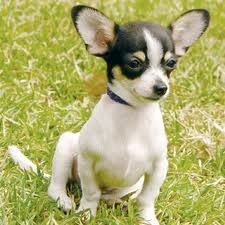
Breed Profile: Chihuahua

Chihuahua Profile by Lauren R. Tharp

The Chihuahua: Little Dogs with Big Attitudes

While Chihuahuas don’t actually have Mexican accents like they do in the movies and on television, they do originate from Mexico. Chihuahua, Mexico, to be specific (go figure?). Recognized by the AKC in 1904, Chihuahuas are estimated to be the oldest—and smallest!—breed to originate in the Americas.

The Chihuahua is now the 11th most popular dog in the United States according to AKC registration records.

Physical Traits

Size & Weight
: The Chihuahua is a Toy breed. An actual “show” Chihuahua is not to exceed six (6) pounds in weight, but pet Chihuahuas can get up to 10-12 pounds and still be considered “healthy.”

Coat & Color:


Most have short coats, but some have longer coats that are “flat” or “curly” in texture. Chihuahuas are generally made up of solid colors, or marked and spotted with color on a white background.

Other: We all know that Chihuahuas are small, but Chihuahuas are also typically known for their apple-shaped heads. They’re also very swift and graceful with their movements.

Life Expectancy: 10-12 years.

Temperament

There’s one thing that all the commercials, television programs, movies, and cartoons seem to get exactly right: Chihuahuas have attitude.

Chihuahuas tend to have very high self-esteem and are quite often filled with a sense of self-importance that’s a force to be reckoned with! (If you’re familiar with the term “Napoleon Complex,” then you know exactly what I’m talking about—shorties with attitude!). They’re actually quite similar to many smaller terrier breeds in temperament.

Chihuahuas are also very charming, alert, confident, and surprisingly self-reliant.

Wags:

• Grooming and exercise needs are relatively low

• Chihuahuas are perfect for an urban environment

• Longer lifespan that most dogs

Challenges:

• With their small size, Chihuahuas are the perfect prey for coyotes and other predators. (In my research, I even read of a few cases in which someone’s pet Chihuahua was taken away by an owl!)

• They aren’t the best dog for first-time dog owners. With their bossy attitudes, Chihuahuas require a moderate to high amount of training.

Chihuahuas are fragile. They can live a long time, but it can be tough getting them there! Chihuahuas have bones that break extremely easily and can suffer from eye problems, heart disease,

If you are considering adding a Chihuahua to your family, please visit Chihuahua Rescue for adorable, adoptable dogs.

October 31, 2011 by Mary Lou Davidson

Breed Profile: Rhodesian Ridgeback

by Lauren R. Tharp

Rhodesian Ridgebacks come from South Africa (from Rhodesia, now known as Zimbabwe).  Originally bred by Boer farmers as a hunting dog, big game hunters in the late 1800s found them especially useful as a companion while hunting down lions while on horseback.  Rhodesian Ridgebacks were eventually introduced to the United States in the early 1950s and became officially recognized by the AKC in 1955.
Physical Traits

Size & Weight: The Rhodesian Ridgeback is a Large breed.  They can be up to 27 inches tall at the shoulder.  Male Rhodesian Ridgebacks typically weigh 80 pounds or more while the females usually weigh in around 60-75 pounds.  These are not small dogs.

Coat & Color: The most noticeable thing about the Rhodesian Ridgeback’s coat is its trademark “ridge” along the spine.  Other than that, the coat is short and sleek.  Their colors are light or dark red wheaten, with or without white markings on their chest and feet.

Other: Somewhat flat skull and wide-set eyes.  They’re often described as having an “intelligent” look to their facial features.

Life Expectancy: 10-12 years
>Temperament

Rhodesian Ridgebacks were originally bred to be fierce hunters and they have managed to retain many of those traits even now!  Strong-willed and extremely independent, Rhodesian Ridgebacks are loyal and protective of their masters but can be aggressive with strangers and other dogs.

These dogs are very energetic and intelligent and require near constant physical and mental stimulation to be happy.  They can become destructive when bored or under-exercised.

The Rhodesian Ridgeback makes an excellent guard dog.

WAGS:

  • Great for an active family.
  • Trained Rhodesian Ridgebacks tend to be calm and gentle unless provoked (they work well for families with older or very well-behaved children)
  • Loyal and protective = the perfect guard dog

CHALLENGES:

  • This is not the dog for a first-time dog owner.  Rhodesian Ridgebacks will challenge you for dominance and absolutely, positively, require obedience training.  And that training will be hard.  Rhodesian Ridgebacks can be subtly described as as “stubborn,” but from what we can tell, they can sometimes be downright defiant!
  • Not good with other small animals.  Unless your Rhodesian Ridgeback is trained at a very early age to respect your other small animals, their first instinct will be to hunt your other pets.
  • Regular exercise is a must.

October 17, 2011 by Mary Lou Davidson

Breed Profile: Manchester Terrier

by Lauren R. Tharp

A descendent of the “original” terrier (the Black and Tan Terrier!), the Manchester Terrier originated in England and was specifically bred to hunt rats!  This breed is still adept at hunting small vermin and remains a favorite dog of terrier-lovers everywhere.  The Manchester Terrier was officially recognized as a breed by the AKC in 1886.

Physical Traits

Size & Weight: Manchester Terriers come in both standard and toy varieties.  Standard Manchester Terriers are usually weighs 13-22 pounds while the Toy variety is generally 7-12 pounds.

Coat & Color: Smooth, short, glossy coats.  Black and tan in color.

Other: There are 3 different ear types: Naturally erect, cropped, or button.

Life Expectancy: 12-14 years
Temperament:

The cross between a Black & Tan Terrier and a Whippet, the Manchester Terrier exhibits personality traits from both its parent breeds.  Manchester Terriers are loyal, energetic, fun-loving, friendly and observant.  Equally good at home with the family as they are on the “hunt.”  They make mighty fine watch dogs.

Wags:

  • Is a very quick learner.  The combination of sharp intelligence and an eagerness to please makes the Manchester Terrier one of the easier terrier breeds for beginners to train.
  • Very little grooming is needed.  Not only does the Manchester Terrier have a short, easy-to-manage coat, but they tend to favor grooming themselves.
  • Great watchdogs!

Challenges:

  • Not the best with small animals.  The “chase” instinct in runs strong in Manchester Terriers.  If you have smaller pets (especially if they’re of the rodent family), then this might not be the dog for you.
  • As with all terrier breeds, obedience training is a must.  And while the Manchester is more manageable than some varieties, they can still be stubborn on occasion.
  • While the Manchester Terrier doesn’t bark incessantly for no reason like some dog breeds, its (perhaps overly) efficient tendencies as a watchdog can lead to more noise than you may be prepared for—or that your living situation will allow.

Special Thanks to Dog Mountain for use of this featured image of the Manchester Terrier.

  • « Go to Previous Page
  • Go to page 1
  • Go to page 2
  • Go to page 3
  • Go to page 4
  • Go to page 5
  • Go to Next Page »

Primary Sidebar

Categories

  • Adoptable Dogs
  • Breed Profile
  • Dog News
  • Dog-Friendly Properties
  • Events
  • Featured Post
  • Medical News
  • My Green Dog
  • Podcasts
  • Resources
  • Right Front
  • Uncategorized
Bayside Pet Resort | Bradenton Dog
Pet Suites Daycare | BradeontonDog.com


http://pawprintsid.com

https://urgentvet.com

Footer

About

BradentonDog.com is dedicated to the dogs and dog owners of Bradenton! We’ll do our best to keep you up-to-date on local activities and all things dog in town. From time to time we’ll also cover national news that we think is of particular interest. Read More…

Recent Posts

  • CrockPot Cooking for your Pup
  • Dog Mountain
  • Breed Profile: Shepherd Husky Mix
  • Breed Profile: German Shorthaired Pointer
  • Calling All Advocates – Urgent Meeting Tomorrow 4/23/19

Copyright © 2026 Bradenton Dog.